Financial Readiness
If household income runs short, real programs exist: who qualifies and how to apply.
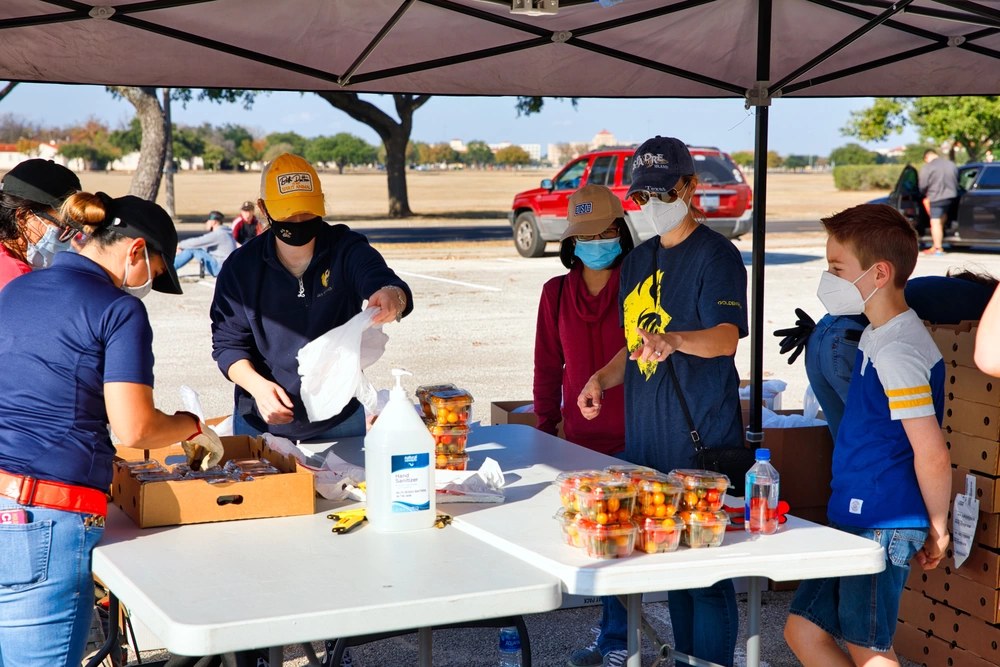
Volunteers distribute food to 250+ military families at JBSA-Fort Sam Houston, Nov. 23, 2020. U.S. Army photo by Sgt. David Cook, DVIDS (public domain).
Upload your Leave & Earnings Statement and get a plain-English breakdown of every line.
Open LES Tool→The Basic Needs Allowance, or BNA, is a monthly payment for service members who have dependents and whose household income falls below a federal limit. The FY2025 NDAA raised that income ceiling to 200 percent of the federal poverty guidelines, so more families now qualify.
If BNA is not a fit, other programs can help. SNAP and WIC cover food, and FSSA helps families serving overseas. Apply through your branch for BNA, and through your state for SNAP and WIC. Needing help here is not a weakness. It is a benefit you earned.
BNA is a monthly allowance that shows up on your LES, which is your monthly pay statement. The newest law widened the door, so check before you assume you earn too much.
200%
The FY2025 NDAA raised the BNA income ceiling to 200 percent of the federal poverty guidelines.
Who generally qualifies
Source: DoD · Congress.gov (CRS)
BNA is a monthly allowance for qualified military families whose income falls below certain federal guidelines. Congress created it to address food insecurity among service families. It is paid as part of your regular military pay, so it shows up on your LES. One thing to plan for: BNA is treated as taxable income, unlike BAH and BAS.
To qualify, you generally need dependents, you must have finished initial training, and your gross household income has to fall below the federal threshold. Your dependents must be registered in DEERS, the military's dependent enrollment system. Your BAH, your housing allowance, still counts in that income math, so include it when you estimate where you land. The exact dollar lines depend on your household size and location.
The services screen pay data and notify members who may qualify, and you apply through your branch. Start with your chain of command or finance office, and watch your notification window, since application timelines apply once you are notified. For SNAP and WIC, you apply through your state agency wherever you live, not through the military.
Food assistance programs differ in one big way: whether a program counts your BAH as income. That single rule decides who gets in.
WIC, BAH may count: Some state WIC agencies exclude BAH for families living in privatized on-base housing, but for families off base it generally counts as income. Check your state WIC agency before assuming you earn too much.
SNAP, BAH usually counts: SNAP generally counts BAH and BAS as income, which is the quirk that disqualifies many off-base families.
Programs to check
Apply through your branch for BNA, and through your state for SNAP and WIC.
Source: USDA · Military OneSource
You do not have to figure this out alone. The DoD Basic Needs Allowance page is the official overview, and your finance office can walk you through it. Military OneSource keeps a food security guide that lists programs and offices near your installation, and you can reach a counselor by phone at 800-342-9647. USDA explains the SNAP income tests and how to apply through your state. Your installation food pantry, relief society, and Personal Financial Manager can also help right now, at no cost. All of these are linked in Sources below.
Can active-duty members really get SNAP or WIC?
It depends on your state and housing. Some state WIC agencies exclude BAH for families in privatized on-base housing; off base, BAH generally counts as income. Check with your state WIC agency.
Does using these benefits affect my security clearance?
Legally using a benefit you are eligible for is different from financial irresponsibility. If you are worried about your specific case, a JAG office or a Military OneSource counselor can advise you.
Is BNA taxed?
Yes. BNA is treated as taxable income, unlike BAH and BAS. Factor that in when you estimate the net benefit.







Comments
Share your experience or ask a question. Comments are reviewed by our team before they appear.
Leave a comment