Financial Readiness
GAP, extended warranties, paint protection, etching: the add-ons to question or decline.
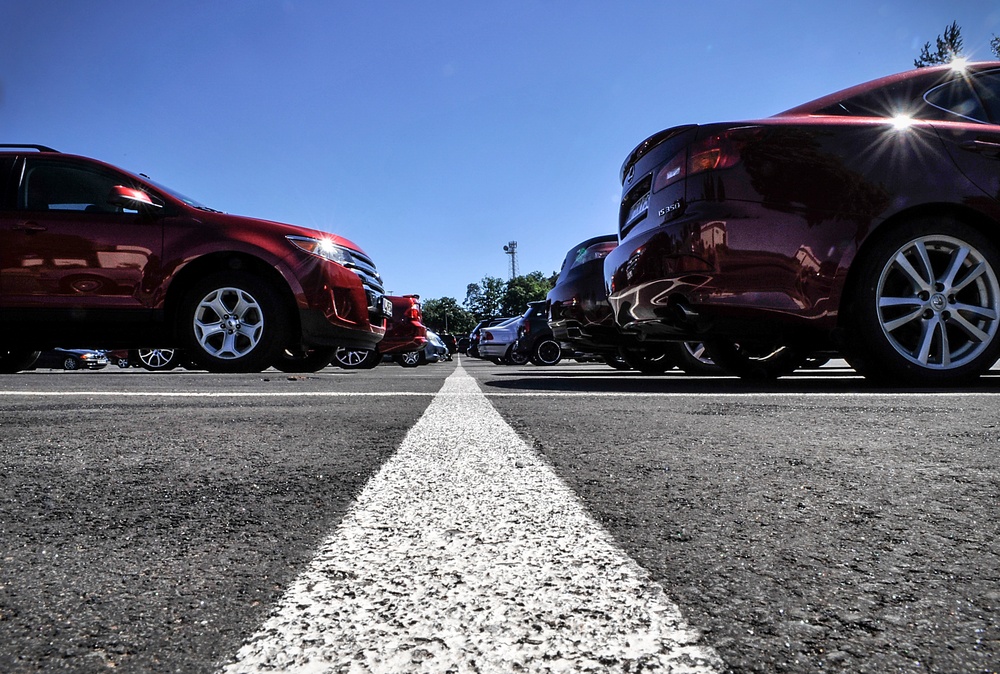
Vehicles at the 86th Force Support Squadron resale lot, Ramstein Air Base, Germany. U.S. Air Force photo by Senior Airman Larissa Greatwood, DVIDS (public domain).
Upload your Leave & Earnings Statement and get a plain-English breakdown of every line.
Open LES Tool→An add-on is an extra product the dealer sells on top of the car: an extended warranty, GAP, paint or fabric protection, VIN etching, prepaid maintenance, and more. They pile on cost fast, and dealers push them hard, sometimes harder on service members.
The one rule that saves you money: you can buy the car without any of it. Ask for an itemized price, decline what you did not ask for, and price anything you actually want against your own bank or insurer first.
Add-ons are where a clean deal quietly gets expensive. None are required to buy the car, and most can be bought elsewhere for less. Make the dealer itemize, then say no to what you did not ask for.
Common add-ons
The base rule
More than 70% of service members bought add-ons, paying about $140 more on average than civilians.
GAP covers the gap between your loan balance and the car's value if it is totaled. A normal auto policy pays what the car is worth, not what you owe, so GAP fills that difference. It can make sense when you put little down and owe more than the car is worth, the exact pattern the CFPB flagged for service members. It matters less once you have real equity. If you want it, compare the dealer's price to your bank, credit union, or insurer, and check for a deductible.
What dealers call an extended warranty is usually a service contract: a promise to pay for certain repairs. Under federal law it is not a warranty, it is optional, and it costs extra. Compare it to the factory warranty already on the car. A service contract that runs while the factory warranty is still active is paying for coverage you already have. These can add hundreds, sometimes more than a thousand dollars, plus financing costs on top.
Paint and fabric protection is often a markup on something close to a product you could apply yourself for far less. VIN etching means etching your vehicle ID onto the glass as a theft deterrent; it is optional, and you can do it cheaply or with a kit on your own. Prepaid maintenance means paying now for oil changes and service later, so run the numbers against paying as you go. For each one, ask the itemized price, see if it beats buying it elsewhere, and decline if it does not.
That same skepticism matters most in the finance office, where the paperwork gets pushed.
Two add-ons get pitched the hardest. One can earn its place, the other often charges you for coverage you already own. Know the difference before you reach the finance office.
GAP can earn it: GAP can make sense if you put little down and owe more than the car is worth. Compare the dealer's price to your bank or insurer, and check for a deductible.
Overlap warranty: An extended warranty (really a service contract) that overlaps your factory warranty is paying for coverage you already have.
In the finance office
Watch the "your warranty is expiring" calls, they are usually a scam with no tie to your dealer.
You do not have to read the paperwork alone. Your installation Personal Financial Management counselors can review a deal before you sign, at no cost. Installation legal assistance can look over anything you are unsure about, also free. The FTC publishes plain guidance on add-ons and service contracts, and you can file a complaint about a dealer or lender with the CFPB. All of these are linked in Sources below.
Are dealer add-ons mandatory?
No. You can generally buy the car without them. If a salesperson says the car cannot be sold without an add-on, that is a misrepresentation.
Can I cancel an add-on after I bought it?
Often, yes. Many add-ons like GAP and service contracts can be canceled for a prorated refund, so check your contract terms. If something was added without your agreement, raise it with the dealer and dispute it.
What is VIN etching, and do I need it?
It etches your vehicle ID onto the glass as a theft deterrent. It is optional, dealers often overcharge for it, and you can do it far cheaper on your own.







Comments
Share your experience or ask a question. Comments are reviewed by our team before they appear.
Leave a comment