Investing
An IRA on top of your TSP: why Roth fits junior members, plus the spousal IRA many miss.

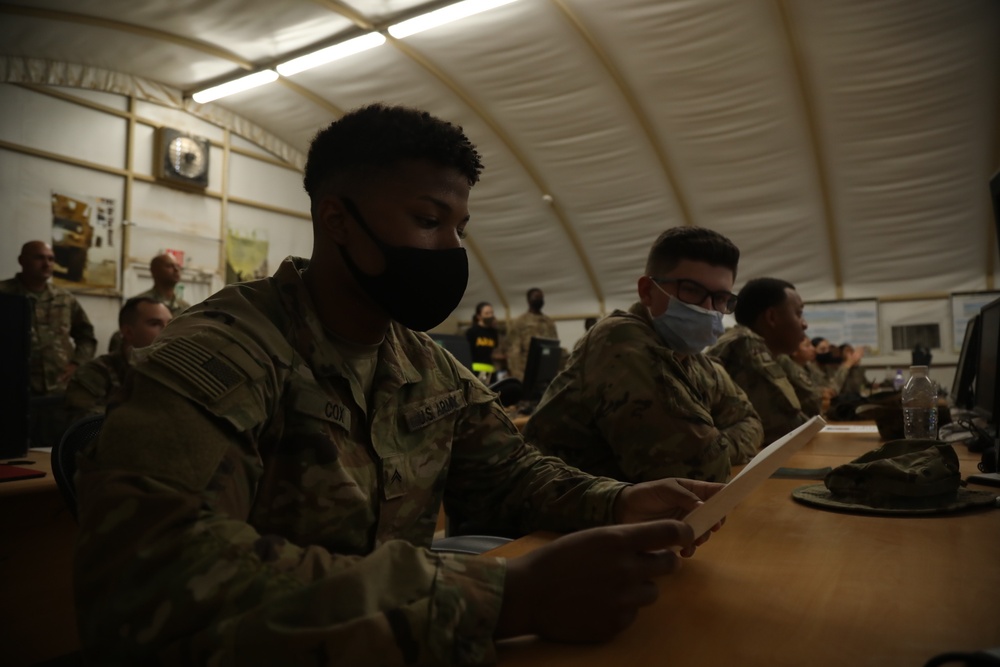
A comptroller squadron technician explains Roth vs. traditional tax treatment. 20th Comptroller Squadron / U.S. Air Force, DVIDS (public domain).
Upload your Leave & Earnings Statement and get a plain-English breakdown of every line.
Open LES Tool→An IRA is a personal retirement account you open yourself, separate from your TSP. The letters stand for individual retirement arrangement, and it gives you a wider menu of funds than the TSP's low-cost core lineup.
The two accounts have separate limits, so one does not use up the other. For many service members the smart order is simple: capture your full TSP match first, fund an IRA next, then add more to the TSP.
Grab the free match first, then open an IRA for more choice, then come back for more TSP. The accounts have separate limits, so you are not trading one for the other.
Roth or traditional?
Roth IRA: Pay tax now, while your bracket is low, then withdraw tax-free later. Often a strong fit for junior service members.
Traditional IRA: deduct the contribution now, pay tax when you withdraw it later. Better when your tax rate is higher today than you expect in retirement.
TSP and IRA have separate limits, so one does not use up the other.
Source: IRS · Investor.gov
You can, and for many service members it makes sense. The TSP and an IRA are separate accounts with separate limits, so contributing to one does not use up your room in the other. A common order is to capture the full TSP match first, since that is earned money you do not want to leave behind, then fund an IRA for more flexibility, then circle back to add more to the TSP.
Why bother with an IRA when the TSP is so cheap? Mainly choice. An IRA lets you pick from a wide menu of funds at the brokerage of your choosing, while the TSP keeps you in its low-cost core funds. The TSP's costs are hard to beat, so if you open an IRA, keep an eye on fees and lean toward low-cost funds there too.
One catch worth knowing: an IRA contribution requires taxable compensation, and the amount you can put in a Roth IRA phases out at higher incomes. Most junior enlisted incomes sit well below those limits, so this rarely affects an E-1 through E-4.
The choice comes down to when you pay the tax. With a Roth IRA, you contribute after-tax dollars now and qualified withdrawals in retirement come out tax-free. With a traditional IRA, you may deduct the contribution now and pay tax when you withdraw later. The question is simple: do you expect to be in a higher tax bracket now or in retirement?
For a junior service member, the answer usually favors Roth. Your tax bracket as an E-3 is likely among the lower brackets of your career. Paying tax now, while the rate is low, and locking in tax-free growth for decades is a strong position. If you expect to earn far more later, as an NCO, officer, or in a civilian career, a Roth lets you pay the cheap tax bill today instead of a bigger one down the road.
This is the part civilian finance blogs cannot tell you. When you deploy to a designated combat zone, the Combat Zone Tax Exclusion makes your military pay tax-free. For enlisted members, all military pay for each month you are present in a combat zone is excluded from federal income tax. That is real money: your basic pay, certain bonuses, and hostile-fire or imminent-danger pay can all be excluded.
That creates a rare opportunity. Tax-free combat pay still counts as compensation you can use to fund an IRA. Put that tax-free money into a Roth IRA, and the contribution is not taxed going in, can grow for years, and qualified withdrawals come out tax-free. Money that dodges tax on both ends is about as good as the tax code gets for a service member.
A note on the TSP side of this: during a combat-zone deployment, contributing to the Roth TSP with tax-free pay follows the same logic, and your contributions still count against the regular elective deferral limit. The IRA and the Roth TSP are separate accounts, so a deployment can be a strong window to fund both if your budget allows. Just remember these are retirement accounts. Reaching the money before age 59 and a half generally triggers taxes and a penalty.
Tax-free combat pay and the spousal IRA are both built for the way military life actually moves.
Combat pay edge: Tax-free combat pay still counts as compensation for an IRA. Route it into a Roth and it dodges tax on both ends.
Spousal IRA edge: File jointly and fund an IRA for a spouse with little income, built for PCS and deployment gaps.
2026 limits
Money that dodges tax on both ends is about as good as the tax code gets for a service member.
Source: IRS
For 2026, the IRA contribution limit is $7,500 if you are under 50, or $8,600 if you are 50 or older. The extra $1,100 is the catch-up. That limit is the combined total across all your IRAs, traditional and Roth together, not per account.
Roth IRAs have income limits. For 2026, the ability to contribute to a Roth IRA phases out between $153,000 and $168,000 of modified adjusted gross income for single filers, and between $242,000 and $252,000 for married couples filing jointly. You have until the tax-filing deadline of the following year to make a contribution for a given year. Most junior enlisted members and their spouses are nowhere near those ceilings.
The TSP is separate. Its elective deferral limit for 2026 is $24,500, a different ceiling that does not touch your IRA room. Contributing to one does not use up the other.
A spousal IRA is the rule that lets a married couple fund an IRA for a spouse who has little or no income of their own. Normally you need taxable compensation to contribute, but if you file a joint return, you can contribute to an IRA based on your spouse's earnings. The IRS calls this the Kay Bailey Hutchison Spousal IRA Limit.
This matters a lot for military families. Frequent PCS moves and deployments make it hard for a military spouse to hold a steady job, and a gap in income should not mean a gap in their retirement savings. With a spousal IRA, the working service member's pay can support contributions to the non-working spouse's own IRA, traditional or Roth, up to the annual limit for each of you. Each spouse owns their account.
The combined contributions cannot exceed the taxable compensation reported on your joint return, and the usual Roth income limits still apply. For a couple where one spouse deploys and the other moves with the household, this is an easy win that often gets overlooked.
Should I have both a TSP and an IRA?
You can have both, and they have separate limits. A common approach is to capture the full TSP match first, then fund an IRA for more investment choice, then add more to the TSP.
Roth or traditional IRA, which is better for me?
It depends on whether your tax rate is lower now or expected to be lower in retirement. Junior service members are often in a low bracket today, which tends to favor Roth: pay the low tax now, withdraw tax-free later. VetraFi cannot decide for you.
Can I use my combat pay to fund a Roth IRA?
Yes. Tax-free combat pay counts as compensation for IRA contributions, so you can route tax-free combat-zone pay into a Roth IRA, where qualified withdrawals later are also tax-free.
How much can I put in an IRA in 2026?
Up to $7,500 if you are under 50, or $8,600 if you are 50 or older, combined across all your IRAs.
What are the Roth IRA income limits for 2026?
The ability to contribute phases out between $153,000 and $168,000 for single filers, and between $242,000 and $252,000 for married filing jointly, of modified adjusted gross income. Most junior enlisted incomes are well below these.
Can my spouse contribute to an IRA if they do not work?
Yes, through a spousal IRA. If you file jointly, you can contribute to your spouse's IRA based on your earnings, under the Kay Bailey Hutchison Spousal IRA Limit.
Is an IRA the same as the TSP?
No. The TSP is your employer-style retirement plan through the military, with its own low-cost funds and the BRS match. An IRA is a personal account you open yourself with a broader menu of funds. They are separate, and you can use both.
You do not have to figure this out alone. The IRS Armed Forces' Tax Guide, Publication 3, covers how military pay and combat-zone rules affect your taxes, and Publication 590-A spells out IRA contribution and spousal IRA rules. Your installation Personal Financial Manager or Personal Financial Counselor is free on base, and Military OneSource offers free tax consultants for combat-zone and IRA questions. For details that get specific, a tax professional who understands military pay can help. VetraFi does not provide tax advice. All sources are linked below.








Comments
Share your experience or ask a question. Comments are reviewed by our team before they appear.
Leave a comment