Financial Readiness
A prepaid card spends money you load, has its own protections, and can hide steep fees.
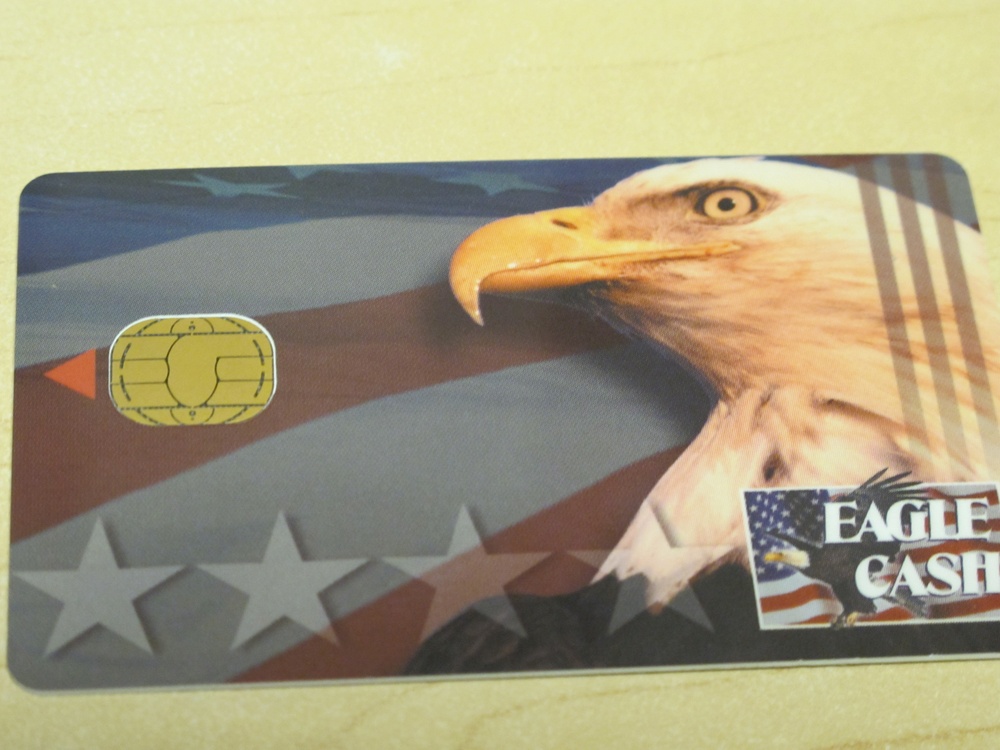
An Eagle Cash stored-value card, Camp Leatherneck, Afghanistan. U.S. Marine Corps photo by Cpl. Michele Hunt, DVIDS (public domain).
Upload your Leave & Earnings Statement and get a plain-English breakdown of every line.
Open LES Tool→A prepaid card holds money you load onto it, and you spend until it runs out. You do not need a bank account to use one. It is not a credit card, so you are not borrowing.
Federal rules make these cards show their fees up front and give you real protections for errors, loss, and theft. But the fees can be high and they vary a lot. So the fine print decides whether a card is a fair deal. Register your card as soon as you can, because that is what unlocks the loss and theft protection.
Get four moves right and the card stays cheap and protected. Skip them and it can quietly cost you every month.
Fees to hunt for
A card that looks free at the rack can cost you every month.
Source: CFPB · Military Consumer (FTC and DoD)
A prepaid card is loaded with your own money in advance, then spent down. It is not tied to a checking account, and it is not a credit card, so you are not borrowing. One limit matters: a prepaid card does not build your credit history. If your goal is to build credit, a prepaid card does not do that job.
Since the CFPB Prepaid Rule took effect on April 1, 2019, these cards come with real federal protections, similar to a checking account. You get limits on your losses if funds are stolen, investigation of errors, and free, easy access to your account info. The rule also added two fee disclosures: a short form that highlights the key fees up front, and a long form that lists every fee, so you can compare cards before you buy.
Read the short-form disclosure first, because that is where the costly fees show up. Common ones include a monthly fee, per-purchase fees, ATM and balance-inquiry fees, cash-reload fees, customer-service fees, and inactivity fees. These fees can run high and differ a lot from card to card, so compare a few before you commit.
Some prepaid cards let you add overdraft protection or a credit feature. If you overspend with one of those, you have to repay the amount you went over, and you may owe a fee. That turns a spend-what-you-have tool into one that can cost extra. To keep your spending capped, turn the add-on down.
The federal rules give prepaid cards real backbone. But the loss and theft coverage only kicks in if you register, so one skipped step can cost you everything on the card.
You are protected: Since the CFPB Prepaid Rule in 2019: limits on your losses if funds are stolen, error resolution, and up-front fee disclosures.
The trap: If you do not register the card and it is lost, you could lose all the money on it, even if you report on time.
Remember
Registering takes a few minutes and is worth it.
Source: CFPB · Military Consumer
You do not have to sort this out alone. Start with your card issuer to register the card and to report any loss, theft, or error. For plain-language guidance, use Military Consumer, the joint FTC and DoD site, and the CFPB prepaid resources. And every active-duty, Guard, and reserve member, plus their family, can get free financial counseling through Military OneSource at 800-342-9647. All of these are linked in Sources below.
Is the money on a prepaid card insured?
It depends on how the program holds the funds, so check the card's disclosures instead of assuming. The CFPB Prepaid Rule requires clear disclosure of the key terms before you sign up.
Does a prepaid card help me build credit?
No. Prepaid cards do not build credit history. Building credit takes a credit product that reports to the credit bureaus.
Where can I compare prepaid card fees?
Start with the short-form and long-form disclosures the card must provide, plus the CFPB prepaid resources.










Comments
Share your experience or ask a question. Comments are reviewed by our team before they appear.
Leave a comment