Financial Readiness
Coverage windows after service: who gets 180 free days, and the cost to bridge after.

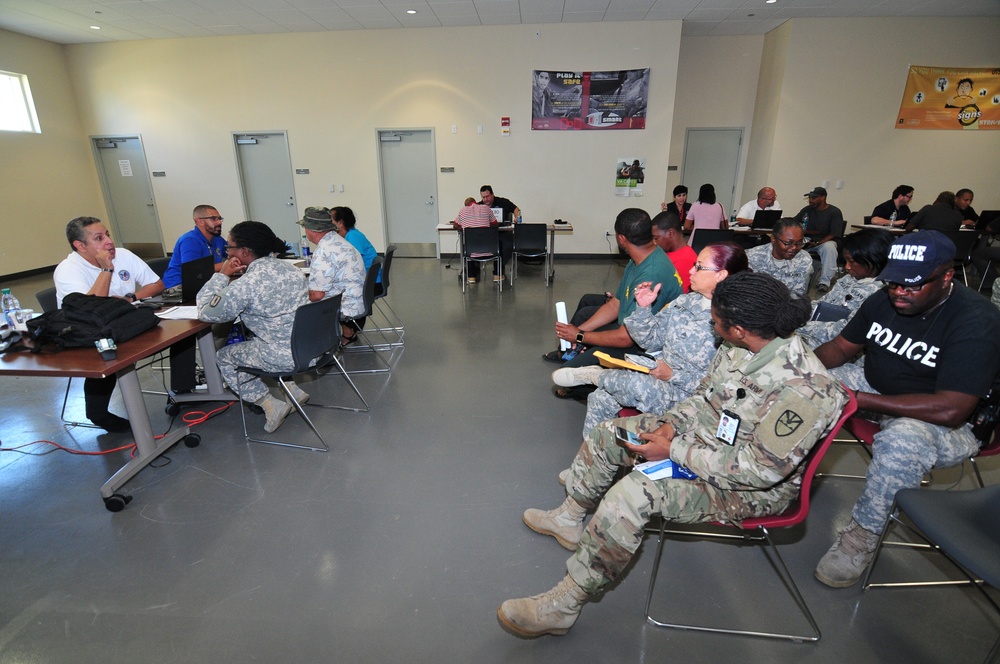
U.S. Navy photo by Mass Communication Specialist 1st Class Laura Myers, Suffolk, Virginia, DVIDS (public domain)
Upload your Leave & Earnings Statement and get a plain-English breakdown of every line.
Open LES Tool→When you get out, your TRICARE does not always end the same day. If you qualify, the Transitional Assistance Management Program, or TAMP, gives you and your family 180 days of premium-free TRICARE that starts the day you separate. Premium-free means you pay no monthly cost for the plan itself.
After TAMP, or if you do not qualify for it, you can buy the Continued Health Care Benefit Program, or CHCBP. It is a paid bridge plan that lasts 18 to 36 months. You have to enroll within 60 days, and for 2026 it runs $2,103 a quarter for an individual or $5,339 a quarter for a family.
Two windows can carry you past your separation date. First, premium-free TRICARE through TAMP if you qualify. Then a paid bridge, CHCBP, that you can buy to cover the gap to your next plan.
180 days
of premium-free TRICARE through TAMP if you qualify, starting the day you separate.
After TAMP, the CHCBP bridge
Do not assume a grace period until you confirm TAMP in milConnect.
Source: TRICARE.mil · 2026 figures
While you are on terminal leave, leave at the end of your service, you are still active duty, so your coverage holds. The real question is the day after your separation date. If you qualify for TAMP, you get 180 premium-free days that begin when you separate. If you do not qualify, your TRICARE ends at separation, and your next move is CHCBP, VA health care, or a civilian plan. Do not assume you have a grace period until you confirm it in milConnect.
TAMP is not automatic for everyone who leaves. It targets specific separations. You generally qualify if you are involuntarily separated under honorable conditions, if you are a Guard or Reserve member separating after more than 30 days of active duty for a contingency operation, if you separate after stop-loss (being involuntarily kept on active duty) for a contingency, or if you move straight into the Selected Reserve with no gap. Your service component sets your eligibility and posts it in DEERS, the system that tracks who is covered, and you check it in milConnect. If you separate voluntarily at the end of a normal enlistment, you usually do not get TAMP, so plan for CHCBP or another plan.
CHCBP is a paid health plan that bridges the gap between military coverage and your next plan. It works a lot like TRICARE Select: same providers and similar rules, but you pay quarterly premiums. Coverage runs 18 months for separating service members and their families, and up to 36 months for certain others. Humana Military runs it, and you buy it within 60 days of losing TRICARE or TAMP. The 2026 premiums work out to roughly $8,400 a year for an individual or $21,400 for a family, so price it against a VA or civilian option before you commit. It can be worth it if you have ongoing care or a pre-existing condition.
Here is why lining this up early matters in uniform.
Most junior service members leave at the end of a normal enlistment, which usually means no TAMP. Know that going in, and line up your next plan before the old one ends.
Usually no TAMP: Separate voluntarily at the end of a normal enlistment and you usually do NOT get TAMP. Coverage can end on your separation date.
When TAMP applies: TAMP targets involuntary separations, certain Guard or Reserve contingency activations, stop-loss, and an immediate move to the Selected Reserve.
Line up your next plan
The mistake to avoid is a coverage gap. Watch the 60-day CHCBP clock.
Source: TRICARE.mil · 2026 figures
You have more than one option, and the right one depends on your health and your plans. VA health care may cover you if you enroll and qualify, and combat veterans get a window of cost-free care for service-related conditions, so apply early. The ACA marketplace, the public health-insurance exchange, opens a special enrollment period when you lose TRICARE. If you join the Guard or Reserve, you may be able to pick up TRICARE Reserve Select (see BN-03). And losing TRICARE may open a special enrollment window on a spouse's employer plan too.
You do not have to sort this out alone. Your transition (TAP) counselor and your S-1 office confirm your TAMP eligibility and fix DEERS before you out-process. You check your own eligibility and coverage dates in milConnect. Humana Military runs CHCBP enrollment, and you apply with DD Form 2837 within 60 days of losing coverage. For VA care, apply early at VA.gov, and combat veterans have a special enrollment window. The official rundown of your options lives on the TRICARE separating page. All of these are linked in Sources below.
How long do I have TRICARE after I get out?
If you qualify for TAMP, 180 premium-free days from your separation date. If you do not, coverage ends at separation and you move to CHCBP, VA care, or a civilian plan.
Do I qualify for TAMP if I get out voluntarily?
Usually not at the end of a normal enlistment. TAMP targets involuntary separations, certain Guard or Reserve contingency activations, stop-loss, and an immediate move to the Selected Reserve. Check milConnect.
What if I miss the 60-day CHCBP window?
You lose the chance to buy CHCBP. That is why you line up VA care or a civilian plan in parallel, so a missed deadline does not leave you uncovered.








Comments
Share your experience or ask a question. Comments are reviewed by our team before they appear.
Leave a comment