Pay & Entitlements
Simple rule: pays are taxable, allowances aren't, with a big combat-zone exception.

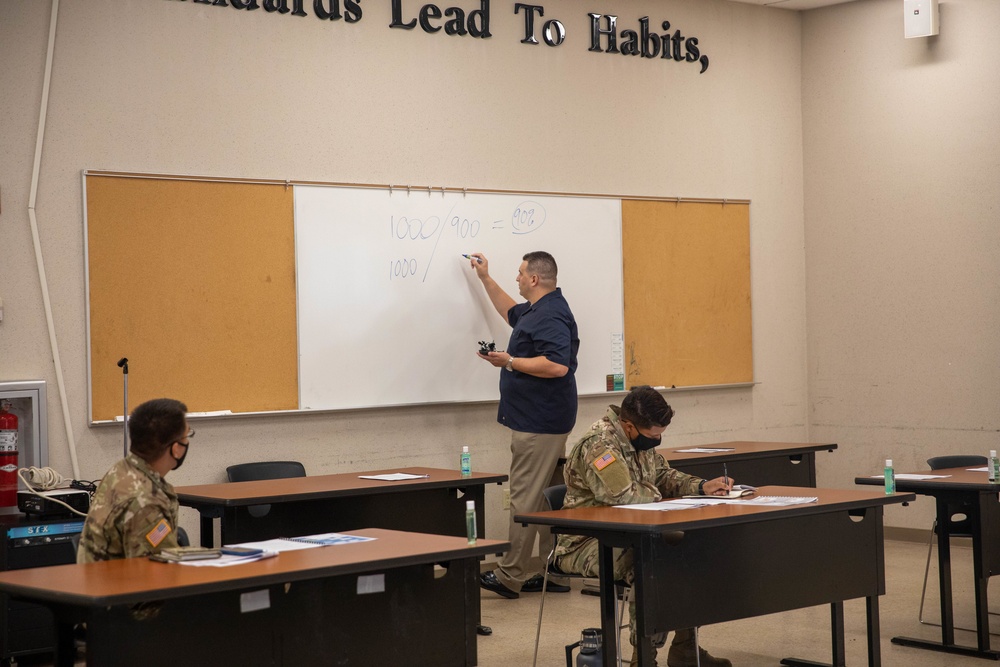
A volunteer provides free VITA tax preparation at Fort Benning. U.S. Army photo by Markeith Horace, DVIDS (public domain).
Upload your Leave & Earnings Statement and get a plain-English breakdown of every line.
Open LES Tool→Your military pay splits into two buckets. Pays are taxable. Allowances are not. Your base pay and most special pays get taxed. Your allowances, like the money for housing and food, do not.
An allowance is money for a purpose, like housing or food, and it is not taxed. A pay is income, and it is taxed. The one big exception is a combat zone, where almost all of your pay can become tax-free.
Your pays are income, so they get taxed. Your allowances are money for a purpose like housing or food, so they stay outside the tax. Two lines trip people up, so watch for them.
Tax-free (allowances): BAH (housing), BAS (food), OHA, moving and lodging, family separation. Outside income tax and FICA (Social Security and Medicare tax).
Taxable (pays): Base pay, most special and incentive pays, reenlistment bonuses, and differential wages.
Two that trip people up
Same-looking lines, different tax treatment. The code decides.
Source: IRS Pub 3
Your allowances. BAH (housing) and BAS (food) are left out of your gross income, along with allowances for moving your household, temporary lodging, family separation, and overseas housing (OHA).
Because these are excluded, they do not show up in Box 1 of your W-2, and they are also outside FICA, which is the Social Security and Medicare tax. That is real money: a dollar of tax-free BAH stretches further than a dollar of taxable base pay.
Your pays. Base pay is taxable. So are most special and incentive pays, reenlistment bonuses, and similar earnings, unless you earn them in a combat zone.
One that catches people: CONUS COLA, which is a taxable stateside high-cost allowance, is taxed even though it has "allowance" in the name. Overseas COLA, by contrast, is tax-free. Differential wage payments from a civilian employer are also taxable.
No. BAH is excluded from income, so it is not taxed and does not appear as wages on your W-2. You can still deduct mortgage interest and real estate taxes you pay out of your BAH if you itemize.
No. BAS follows the same rule as BAH. It is a tax-free allowance and is left out of your taxable wages.
It is the rule that lets you keep federal income tax off pay you earn while serving in a combat zone, which is an area the President designates where pay can be tax-free. For enlisted members and warrant officers, all of your military pay for those months can be excluded. This is the single biggest tax break most service members ever see.
For the full mechanics and the current combat-zone list, see our deployment pay articles and IRS Publication 3.
Here is why this matters most right before a deployment.
A combat zone flips the usual rule. For enlisted and warrant officers, the pay you usually owe tax on can come home untaxed. Know the details before you deploy.
Combat Zone Tax Exclusion: For enlisted and warrant officers, all military pay for any month you serve in a designated combat zone is excluded from federal income tax.
Know the details
Base pay still counts toward Social Security; allowances are outside FICA entirely.
Base pay does count toward Social Security and Medicare through FICA withholding, and that includes basic pay earned in a combat zone. The Combat Zone Tax Exclusion removes federal income tax, but FICA taxes are still withheld, so those months still build your Social Security earnings record. Allowances like BAH and BAS are outside FICA entirely. Publication 3 covers the specifics.
Because CONUS COLA is treated as taxable supplemental pay, while BAH is a statutory tax-free allowance. They look similar on your LES, but the tax code treats them differently.
It depends on your state of legal residence, which does not change just because you PCS. Some states tax military pay, some exempt part or all of it. Confirm your state of legal residence in MyPay and check your state's rules.
Start with your servicing finance or disbursing office, which may be your S-1, admin, or the base finance office, for anything specific to your pay account. You can reach DFAS customer service at 1-888-332-7411, or use askDFAS for pay-record questions. View your LES, tax withholding, allotments, and TSP in MyPay. Free financial counseling is available 24/7 through Military OneSource for service members and families. Your installation's Personal Financial Management program, such as Army Community Service, Fleet and Family Support, Airman and Family Readiness, or Marine Corps Community Services, offers free in-person counseling.
Is my whole paycheck tax-free in a combat zone?
For enlisted and warrant officers, yes in most cases: the qualifying military pay for those months can be fully excluded from federal income tax. Officers are capped at the top enlisted basic pay rate plus hostile fire or imminent danger pay.
Which pays and allowances end up tax-free?
Allowances such as BAH, BAS, OHA, moving and lodging allowances, and family separation allowance, plus any pay excluded under the Combat Zone Tax Exclusion.
Does tax-free pay still count toward Social Security?
Yes for base pay, including basic pay earned in a combat zone: the exclusion applies to federal income tax, while Social Security and Medicare (FICA) taxes still come out. Allowances like BAH and BAS are outside FICA. Publication 3 has the specifics.
Want to see which of your pay lines are taxable? Upload your LES to the VetraFi LES tool for a plain-English breakdown.







Comments
Share your experience or ask a question. Comments are reviewed by our team before they appear.
Leave a comment