Financial Readiness
Where your first dollar goes, why your age is the asset, and why the TSP match is yours.
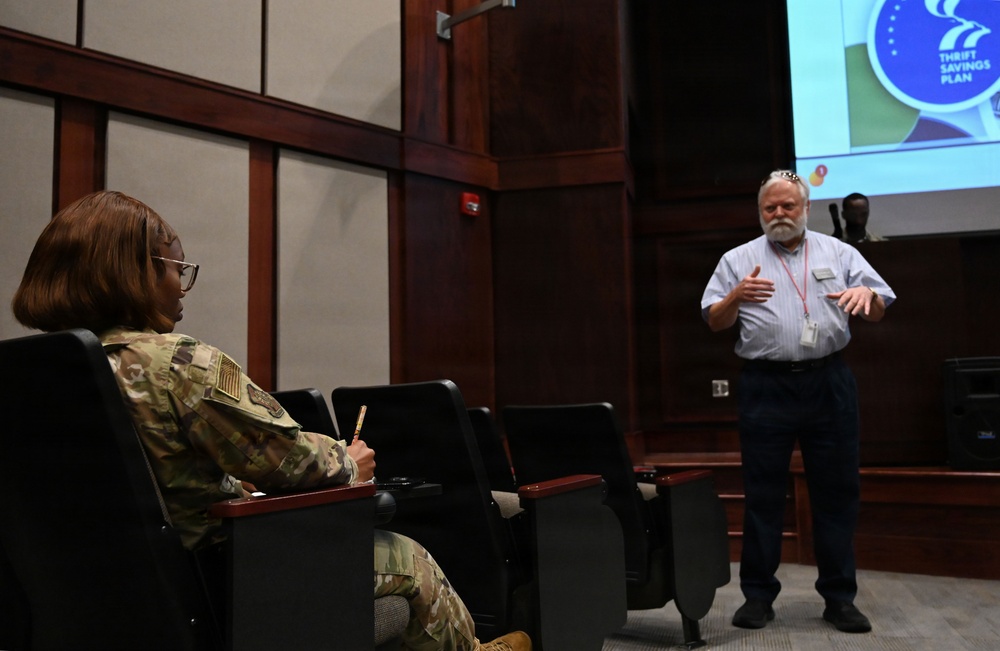
U.S. Air National Guard photo by Tech. Sgt. Renee Crugnale, 187th Fighter Wing, DVIDS (public domain)
Upload your Leave & Earnings Statement and get a plain-English breakdown of every line.
Open LES Tool→You may already be investing and not know it. If you joined on or after January 1, 2018, you were signed up for the Blended Retirement System (BRS), so you already have a Thrift Savings Plan (TSP) account, which is the military's version of a 401(k). You do not open a brokerage account or pick stocks to begin. You log into your pay system and set a contribution percentage.
The order is simple: save a little cash first, then put in enough to get the full government match, then add more. The match is free money the government adds on top of what you contribute, and skipping it leaves earned pay on the table.
Three steps, in order. Set aside a little cash so a surprise does not derail you, put in enough to get every dollar of the match, then keep climbing when your budget allows.
The match: Put in 5% and the government adds up to 5% (1% automatic, plus up to 4% matched). That is up to 10% of your basic pay landing every payday.
TSP fees are tiny: about 0.034% to 0.051%. An expense ratio is the small yearly fee a fund charges, and low fees leave more of your money working for you.
Skipping the match leaves earned money on the table.
If you joined on or after January 1, 2018, your TSP account already exists under BRS, and new accounts are set to contribute 5% of basic pay by default. New enrollees are placed in an age-based Lifecycle (L) fund, which spreads your money across a professionally built mix. If you have not touched your TSP since basic, log in and check. You may already be investing.
Before you put a dollar into the market, set aside cash you can reach fast. Regulators put basic needs, like emergency savings and high-interest debt, ahead of investing for a reason. No service member should be one flat tire or government shutdown away from financial chaos. Even $1,000 set aside covers most everyday emergencies, so you do not have to sell investments when your truck throws a transmission two states from home.
Once you have a cash cushion, contribute enough to the TSP to get every dollar of the government match. Under BRS, the government adds an automatic 1% of your basic pay after 60 days of service, then matches your own contributions up to another 4% once you reach the two-year mark. That is up to 5% from the government when you put in 5%, so a total of 10% of your basic pay can land in your account each pay period.
Starting young is what does the most work. Here is why.
Compounding is interest earning interest, and it rewards time more than it rewards big paychecks. The early dollars get the most years to grow.
Time on your side: A 19-year-old has a runway a 30-year-old does not. The early dollars get the most years to compound, so they matter most.
Start small and automatic
You are the youngest you are ever going to be, with steady pay and low costs.
You do not have to set this up alone. Your installation Personal Financial Manager or Personal Financial Counselor is free on every base and can walk you through setting your TSP percentage. Military OneSource offers free financial counseling for service members and families by phone. For the actual button that changes your TSP percentage, use MyPay or your finance office, and you can reach the TSP ThriftLine at 1-877-968-3778. FINRA and Investor.gov both offer free investor education. All of these are linked in Sources below.
How do I start investing in the military?
Log into your pay system, set a TSP contribution percentage of at least 5% to get the full match, and confirm your money is going into a fund rather than sitting idle. If you joined on or after January 1, 2018, your TSP account already exists under BRS.
Should I save or invest first?
Build a starter emergency fund first so a surprise expense does not force you to sell investments or take on debt. After that, capture the TSP match, then add more.
Is it too late if I am already a few years in?
No. The next chance to start is this pay period. Compounding still works in your favor with decades left before retirement age. Set a percentage today and raise it at your next promotion.









Comments
Share your experience or ask a question. Comments are reviewed by our team before they appear.
Leave a comment