Financial Readiness
Why scammers hunt in formation, the plays they run, and how to lock your credit first.

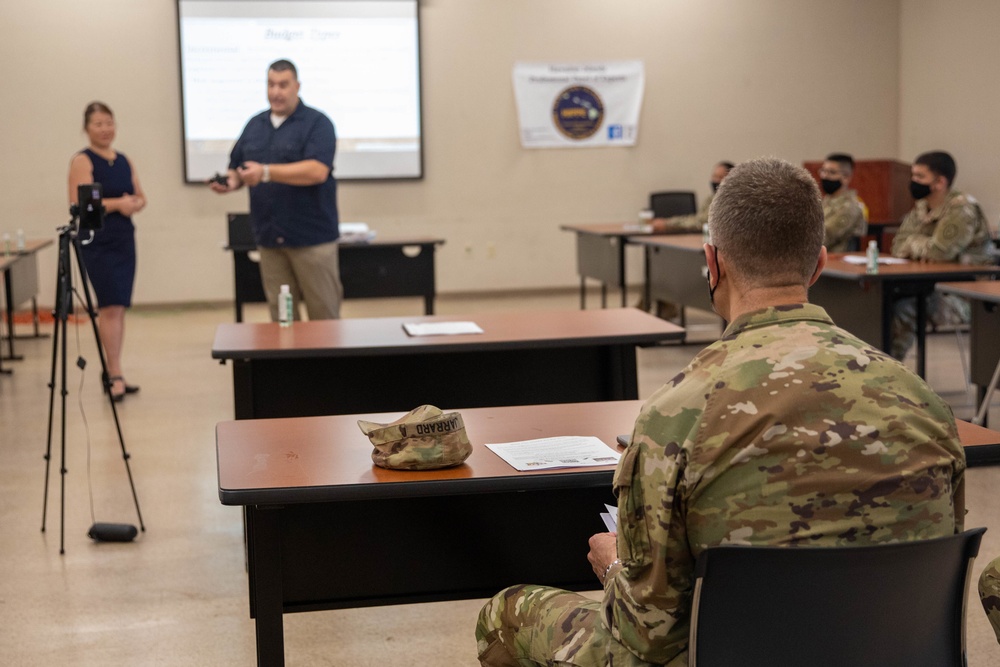
A cyber operations expert leads a cyber-security and scam-awareness session. U.S. Air Force photo by Capt. Nadine Wiley De Moura, DVIDS (public domain).
Upload your Leave & Earnings Statement and get a plain-English breakdown of every line.
Open LES Tool→Scammers target service members on purpose. You have a paycheck that shows up like clockwork, a security clearance you cannot afford to risk, and a life that involves moving to strange cities on short notice. The big plays: imposters pretending to be DFAS or your chain of command, fake landlords during PCS season, romance scams, identity theft, and lenders who slap the word "military" on a bad deal. An imposter scam is when someone pretends to be a real agency or company to pull money or information out of you.
Your countermoves are free: an active-duty credit alert, a credit freeze, free credit monitoring, and knowing where to report. The pattern to memorize: urgency plus secrecy plus an unusual payment method, like gift cards, a wire, or crypto, equals scam.
Most scams aimed at the military reuse a handful of scripts. Learn the lineup on the left, then memorize the one pattern on the right that almost every one of them shares.
Common scams
The pattern to memorize: URGENCY plus SECRECY plus an unusual payment method (gift cards, wire, crypto) equals scam .
Real agencies do not cold-call demanding your SSN, myPay login, or a payment.
Think about what a fraudster sees when they look at a 20-year-old E-3. Pay that lands like clockwork on the 1st and 15th. First time managing money away from home. A clearance that creates real fear, because unmanaged debt can become a security clearance problem, and scammers weaponize that fear with lines like "pay now or we report this to your command." PCS moves that force fast decisions about housing in cities you have only seen on a map. Deployments that put oceans between you and your accounts.
The numbers back this up. The CFPB's Office of Servicemember Affairs tracks tens of thousands of complaints from military consumers every year, and fraud and identity theft sit near the top of the pile. You are not paranoid for assuming someone is working an angle on you. Someone is.
Imposter scams. A call, text, or email claiming to be DFAS, your bank, the VA, or even your command, saying there is a pay problem or a benefit you need to "verify" with your SSN, myPay login, or account number. Real agencies do not call you and demand credentials or payment.
PCS housing and fake-landlord scams. A great-looking rental near your new base, priced just under market, and a "landlord" who cannot show it because they are "overseas" but needs a deposit wired today to hold it. The listing is stolen from a real property. Money sent, and the keys do not exist. Do not send deposits for a place nobody you trust has walked through.
Romance scams. These run both directions: service members get targeted online, and scammers also impersonate service members to bleed civilians. Either way the script ends with a money request, often crypto or gift cards, from someone you have only ever met on a screen.
Identity theft. Your SSN has been on more forms than you can count, and deployments create long stretches where nobody is watching your credit. Thieves open accounts in your name while you are downrange.
Predatory "military" lenders. Storefronts outside the gate and websites with eagles and flags pushing high-cost loans at people with steady pay. The word "military" in a company name is marketing, not an endorsement. Federal law caps the cost of many consumer loans to active-duty members and dependents, so know your Military Lending Act rights before you sign anything. (See VetraFi's guides on the Military Lending Act and on the debt traps waiting outside the gate.)
Affinity scams inside the community. A "fellow vet" at the unit or in a Facebook group pitching a can't-miss investment or business. Shared service builds trust fast, and con artists know it. Veteran status is not a credential. Verify any investment pitch independently, no matter whose unit patch is on it.
The fastest way to spot a fake is to know what the real thing does. Banks, DFAS, the VA, and your chain of command follow rules that scammers do not. Hold any message up against this list before you act.
A real bank, DFAS, the VA, or your command will:
A phishing or impersonation message will:
If a message asks for a password, a one-time code, or a payment, it is not your bank or DFAS. Full stop.
When in doubt, verify out-of-band: do not reply or tap the link. Open a new tab and type the address yourself, or call the number on the back of your card or the agency's official site. Even a real-looking .mil sender can be spoofed, so confirm through a channel you chose. Source: FTC; CFPB
Run it against three tests. Urgency: are they pressuring you to act in minutes or hours? Secrecy: are they telling you not to talk to your chain of command, your bank, or your spouse? Payment method: are they asking for gift cards, wire transfers, payment apps, or crypto? Any one of those is a red flag. Two or more and you can stop reading and delete.
Then verify out-of-band, meaning through a separate channel you find yourself, not the one in the message. Do not use the phone number or link they sent. Log in to myPay directly by typing the address yourself, call DFAS or your bank at the number on their official site or the back of your card, or walk the question into your finance office or first sergeant. Official military pay business runs through official channels, and even a real .mil sender deserves a second look, since "from" addresses get spoofed. If it touched your pay, treat verification like a pre-combat check: trust nothing you did not inspect yourself.
OPSEC means operations security, which is the habit of not oversharing details that an adversary, or a scammer, could use against you. Scammers build their scripts from your feed. A post that says "leaving for nine months, gonna miss this guy" tells a fraudster exactly when your house and your accounts go unattended, and gives a romance scammer raw material to impersonate you. Keep these off public social media:
Lock accounts down to people you actually know, and assume anything public gets scraped.
Federal law hands service members tools the average consumer has to pay for or never hears about. Set them up on the left, and keep the right column handy for the day something slips through.
All free, from federal law
Where to report
Verify out-of-band: type myPay's address yourself, or call the number on your card, never the one in the message.
Source: FTC · IdentityTheft.gov
Four tools, all free, straight from federal law and the FTC.
Active-duty alert. Available to active-duty members. It tells businesses to verify your identity before opening credit in your name, lasts one year, and is renewable for the length of a deployment. Bonus: it pulls your name off prescreened credit and insurance offer lists for two years. Contact one bureau (Equifax, Experian, or TransUnion) and it must notify the other two.
Credit freeze. A credit freeze blocks new-account checks until you lift it. It is the heavier option: it stops most new-account credit checks entirely, stays on until you remove it, and costs nothing. You set it with each of the three bureaus separately. Lifting it takes minutes online when you actually need new credit. Deploying? Freeze before you go.
Free credit monitoring. Under an FTC rule, the three nationwide bureaus must offer free electronic credit monitoring to active-duty members and National Guard members. Sign up with each bureau, and alerts will flag new activity fast.
Free credit reports. Check your reports from all three bureaus at AnnualCreditReport.com, the official source, available weekly at no cost. Look for accounts and addresses you do not recognize.
Fraud and scams: ReportFraud.ftc.gov. Your report feeds law enforcement databases. Internet crime, including romance scams and account takeovers: IC3.gov, the FBI's Internet Crime Complaint Center. Identity theft: IdentityTheft.gov walks you through a personalized recovery plan and generates the reports you need. Financial product problems: file a complaint with the CFPB, which has a dedicated servicemember office. On the military side, loop in your chain of command, your base legal assistance office, and your bank's fraud line. If money already moved, call the bank first, because speed matters.
How do I know if a military email or call is a scam?
Check for urgency, secrecy, and weird payment methods like gift cards, wire, or crypto. Then verify through official channels you find yourself: type myPay's address directly, use the phone number on the agency's real site, or ask your finance office. DFAS does not cold-call asking for your login or SSN.
What is an active-duty credit alert?
A free flag on your credit file for active-duty members. Businesses are told to verify your identity before opening new credit. It lasts one year, is renewable during deployment, and removes you from prescreened offer lists for two years. One bureau notifies the other two.
Should I freeze my credit before deploying?
A freeze is the strongest free protection while you cannot watch your accounts, and you can lift it online when you are back and need credit. Many deploying members pair a freeze with the free credit monitoring the bureaus must offer. What fits depends on whether you expect to need new credit mid-deployment.
Where do I report a scam?
Fraud goes to ReportFraud.ftc.gov, internet crime to IC3.gov, and identity theft to IdentityTheft.gov. Also loop in your bank and your chain of command.
Can a scam affect my security clearance?
It can. Unresolved debt and identity theft fallout can raise questions during clearance reviews, which is exactly why scammers use clearance threats as pressure. Reporting promptly and documenting everything, including an IdentityTheft.gov report, shows you handled it responsibly. Base legal assistance can help you get ahead of it.
What is a PCS housing scam?
A fake or hijacked rental listing near your gaining installation, an "out of town" landlord, and a demand for a wired deposit before anyone sees the property. Verify the owner through county property records or a reputable property manager, and do not wire deposits for unseen rentals.
Is the free credit monitoring really free for the military?
Yes. An FTC rule requires Equifax, Experian, and TransUnion to provide free electronic credit monitoring to active-duty service members and National Guard members. If a bureau's site pushes you toward a paid product instead, back out and find the military monitoring enrollment page.
FTC military consumer resources, CFPB servicemember resources and complaints, your base legal assistance office (free help with fraud, debt collection pressure, and identity theft fallout), and Personal Financial Counselors (free, confidential financial counseling through Military OneSource at 800-342-9647 and your installation's Military and Family Support Center). All of the websites are linked in Sources below.








Comments
Share your experience or ask a question. Comments are reviewed by our team before they appear.
Leave a comment