Financial Readiness
A move breaks any plan that assumes you stay put. Build the move in from day one.
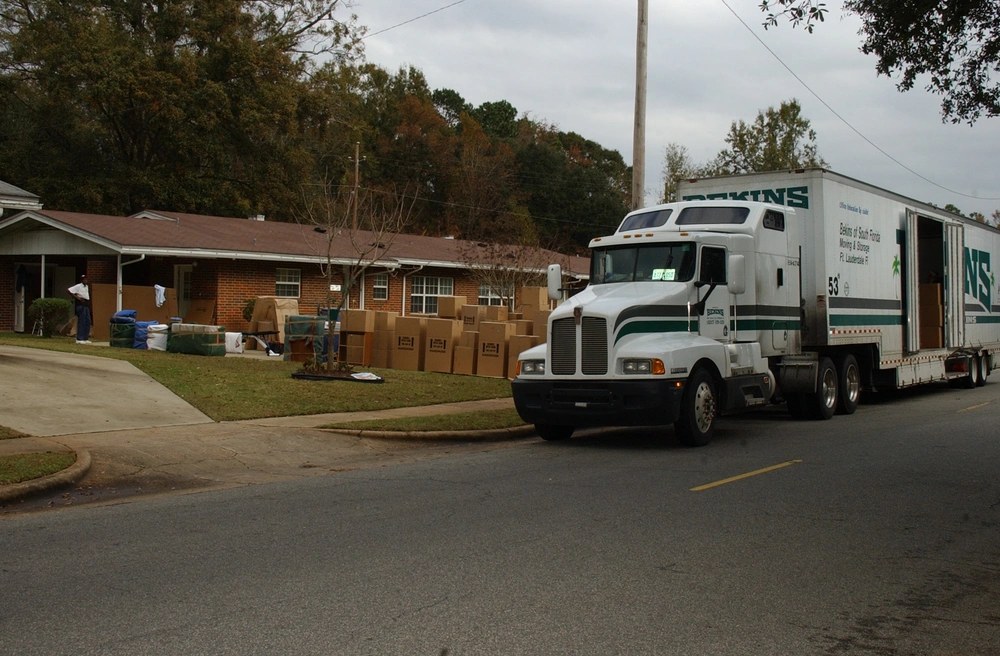
A moving truck is unloaded as a military family moves into a new home at Camp Lejeune, N.C.. Courtesy photo, DoD/American Forces Press Service, DVIDS (public domain).
Upload your Leave & Earnings Statement and get a plain-English breakdown of every line.
Open LES Tool→A PCS, short for a permanent change of station, is a military move. It wrecks any money plan that assumes you stay put, so build the move in from the start.
Keep a separate PCS cash buffer, apart from your emergency fund. Automate your saving so it keeps going while your life is in boxes, and use accounts you can reach from anywhere, not ones tied to one base.
Keep a separate buffer, automate your saving, use accounts that travel with you, then re-check your goals once you land and see the real costs.
What a strong goal looks like
Vague goals die during a move. Sharp ones survive.
Source: CFPB · Military OneSource
Costs hit up front and reimbursements lag. You front money for travel, deposits, and setting up a new place, then you wait to be paid back. For an overseas move, called OCONUS, the military can help with the added costs of an international move and living abroad, but you still feel the timing gap.
Keep a PCS buffer separate from your emergency fund. The Dislocation Allowance, or DLA, is designed to partially reimburse a service member for PCS expenses. Read that as partial: DLA helps but does not cover everything, and the timing does not reliably beat the bills. A dedicated buffer covers the gap.
Automate and simplify before the chaos. Set transfers to run on their own so saving continues during travel and in-processing. Use accounts you can reach from anywhere, not tied to one installation. Once you arrive and new costs are clear, like housing and the commute, revisit your goals. Free checking and avoiding account fees matter even more when you change duty stations.
A move costs money before any reimbursement lands. The buffer is what stands between the timing gap and a raided emergency fund.
No buffer: You front the cash for travel, deposits, and setting up a new place, then wait on reimbursements that lag.
Separate PCS buffer: The buffer covers the gap, so your emergency fund stays untouched and you move without borrowing.
Know this going in
Treat the move like a planned field problem and prep for it.
Source: DoD (DLA) · Military OneSource · CFPB
You do not have to plan a move alone. Military OneSource has PCS experts who can walk you through the financial side of a move and the common pitfalls, and you can reach a free Personal Financial Counselor at 800-342-9647. The DoD Office of Financial Readiness offers free savings calculators, and the Consumer Financial Protection Bureau (CFPB) lays out the military financial lifecycle. All are linked in Sources below.
Should I pause saving during a PCS?
Try not to pause entirely. Even a smaller automatic contribution keeps the habit alive, and a separate PCS buffer absorbs the move.
Does DLA cover my whole move?
No. It is a partial reimbursement, so plan a buffer for the rest.
When do I get reimbursed?
Timing varies and often lags the spending. That is exactly why a buffer before the move matters.






Comments
Share your experience or ask a question. Comments are reviewed by our team before they appear.
Leave a comment